
Cat Health Records: What to Save After Every Vet Visit
If you’ve ever tried to find a rabies certificate five minutes before boarding drop-off, you already understand why cat health records matter. Keeping complete vet visit records for your cat isn’t just “admin work”-it’s the difference between calm decisions and frantic guessing, especially when something changes quickly.
This guide gives you a practical cat health records checklist, a simple system for storing proof, and a care timeline that helps you keep records current year after year.
Why this matters
Cats are famous for hiding symptoms. That makes context critical when you need help. Real-life moments where records matter include: - Your cat stops eating and the vet asks what meds were tried before - A new clinic needs previous lab work or imaging summaries - Boarding requires proof of rabies and recent core vaccines - You’re managing chronic issues like allergies, kidney disease, or dental pain
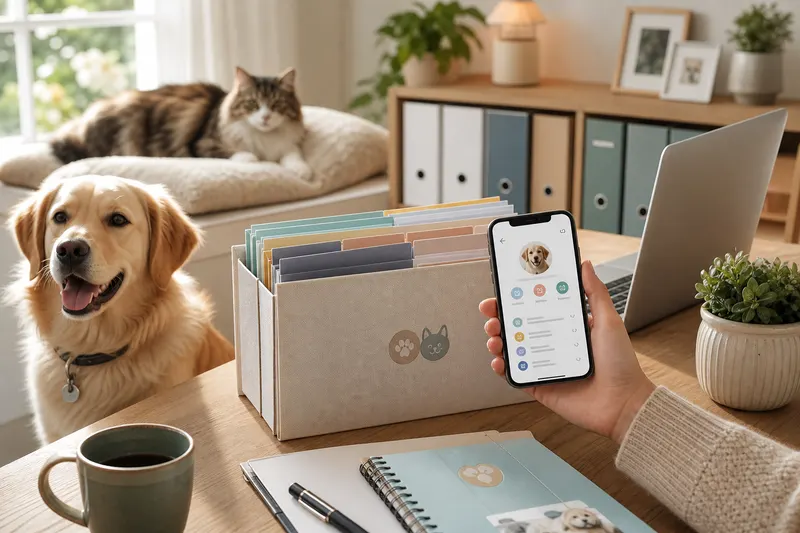
PetClues helps by serving as a pet health records app where you can store documents, track due dates, and keep an emergency-ready summary you can share quickly.
Cat health records checklist (what to save)
Identity and baseline - Current photo and description - Age and approximate weight history - Microchip ID and registration confirmation
Update microchip details using microchip registration.
Vaccines and preventatives - Rabies certificate - Core vaccine proof (often FVRCP) - Any risk-based vaccines (if applicable) - Flea/tick and prevention notes if used
Use these for guidance: - cat vaccination schedule - flea tick prevention
Vet visit records (the heart of your file)
For each visit, save: - Visit summary or discharge notes - Itemized invoice - Prescriptions and dosing instructions - Lab results (bloodwork, fecal, urinalysis) when provided - Imaging summaries (X-ray, ultrasound reports)
If invoices feel confusing, use vet bill organizer as your decoder and storage system.
Medications and allergies - Current medication list (name, dose, frequency) - Past medications and why they were stopped - Known allergies or reactions (including vaccine reactions)
Keep schedules consistent with pet medication reminder.
Dental and procedure history - Dental cleaning invoices and anesthesia notes - Tooth extractions and recheck plans - Any surgeries or hospitalizations
If you also have a dog at home, dental planning tips apply similarly: dog dental care schedule.
Step-by-step: organize cat health records in 60-90 minutes
- Pick one home for everything (cloud folder or a pet health records app).
- Collect what you already have: email, photo roll, clinic portals.
- Upload the “big three” first: - Rabies certificate - Most recent invoice/visit summary - Current prescription
- Name and label so it’s searchable by date and clinic.
- Add reminders: vaccines, preventatives, rechecks, and refills.
PetClues supports this workflow by linking documents to reminders and daily check-ins, so records stay alive and updated rather than becoming a dead folder.
Build a cat care timeline that keeps records current
Monthly - Quick review: any refills needed? - Confirm prevention doses if used - Short check-in note: appetite, stool, energy, symptoms
Quarterly - Review record completeness: did you upload the last invoice and notes? - Update your emergency summary and contacts: - pet emergency information
Annually - Review vaccine timing: - cat vaccination schedule - Verify microchip info: - microchip registration
Common mistakes (and how to avoid them) - Saving invoices but not the rabies certificate (facilities often require the certificate) - Mixing multiple cats’ records without clear labels - Relying on “the vet has it” instead of keeping your own copy - Not writing down medication doses and last dose times - Waiting until boarding or travel to organize records - Forgetting to note reactions (meds, vaccines, foods) - Losing context because you don’t track dates for symptom changes
What veterinarians recommend (expert record tips)
Vets generally recommend: - Centralize records from every clinic (primary, emergency, specialist). - Keep a concise medication list that’s always current. - Track trends: appetite and weight changes matter. - Bring a summary: 2-4 weeks of notes can accelerate diagnosis.
PetClues helps by combining records, reminders, and daily check-ins so the “what happened when” timeline is easy to share.
Vet visit records: a clinic-ready packet
If you want your vet visit records to be useful during a call or appointment, keep a small “clinic-ready” packet: - Current medication list with doses and last dose times - Recent weights (even approximate trends) - A short symptom timeline: “started Tuesday, improved Thursday, returned Saturday” - The last visit summary and any recent labs
This packet is also useful if you ever need urgent care. Pair it with pet emergency information so the essentials are always accessible.
Monthly mini-check-in template for cats
Cats don’t need long diary entries. A useful monthly note can be: - Appetite: normal/reduced/picky - Water: normal/low/high - Litter box: normal/constipation/diarrhea/urination changes - Energy and behavior: normal/hiding/less play - Any vomiting, coughing, or itching
If itching or ear issues are recurring, track patterns with pet allergy tracker.
Sharing records with sitters, boarding, and travel
Cat records matter beyond the clinic: - For boarding forms: pet boarding preparation - For travel planning: traveling with pets - For caregivers: pet sitter instructions
PetClues makes this easier by letting you keep certificates and summaries in one place so you can share only what’s needed without sending dozens of files.
Cat health records for chronic conditions (what to capture)
If your cat has an ongoing condition, records become even more valuable. Useful items to track include:
Allergies or recurrent ear/skin issues - Flare dates and severity - Foods and treats introduced around flare-ups - Medications tried and response time
Use pet allergy tracker to keep patterns consistent.
Dental pain or appetite changes - Chewing changes and food preferences - Weight trend (even approximate) - Dental invoices and anesthesia notes
Senior monitoring
For older cats, even short monthly notes help: appetite, litter box changes, weight drift, and medication changes. The same “trend mindset” in senior dog care applies: track drift early and bring a concise summary to your vet.
FAQ
What are cat health records?
They’re the documents and timelines that capture your cat’s medical history: vaccines, lab results, invoices, medications, and visit notes.
What counts as vet visit records?
Visit summaries, discharge notes, prescriptions, lab results, and itemized invoices all count as records-and each helps your vet understand history.
What should I upload first if I’m overwhelmed?
Start with rabies certificate, most recent visit summary/invoice, and current prescriptions. Add older records gradually.
How do I store records for multiple cats?
Use separate profiles or folders and consistent naming. A pet health records app like PetClues helps prevent mix-ups.
How do I keep medication info accurate?
Store exact drug names, doses, frequency, and last dose times. Use pet medication reminder for reminders and logs.
Do I need to keep invoices if I have visit notes?
Yes. Invoices often include test names and medication details not fully described elsewhere.
How often should I review records?
Monthly for medication/refills and quarterly for completeness. Annual review for vaccines and microchip info is a strong baseline.
How does PetClues help with cat health records?
It stores documents, links reminders to due dates, and supports daily check-ins and emergency summaries in one place.
What records matter most for boarding?
Rabies certificate, core vaccine dates (often FVRCP), and any medication instructions. See pet boarding preparation.