
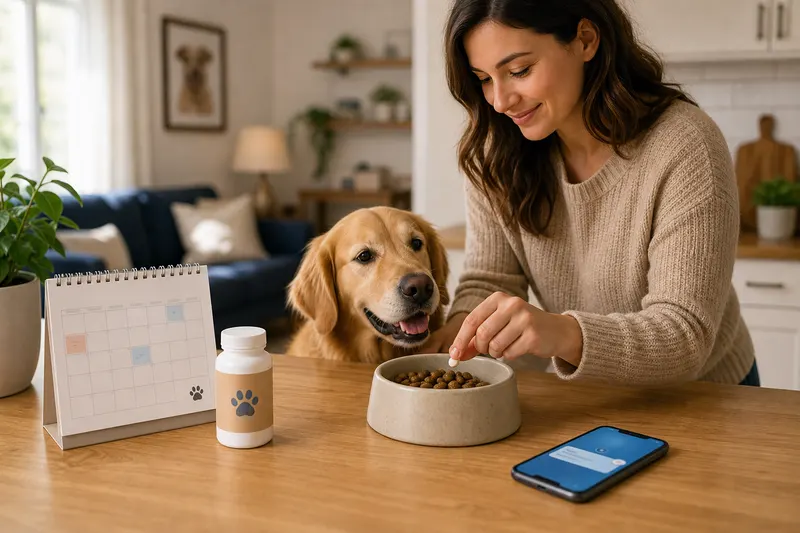
Pet Medication Reminder: How to Never Miss a Dose Again
If you’ve ever stared at a pill bottle and thought, “Did I already give this?” you’re not alone. A reliable pet medication reminder system is one of the most practical upgrades you can make for your pet’s health-especially when prescriptions multiply, schedules change, or more than one person helps with care. And if you’re managing a chronic condition, building a consistent dog medication schedule (or cat schedule) can be the difference between stable symptoms and confusing flare-ups.
This guide gives you a simple medication routine you can set up today. You’ll learn how to write a schedule your whole household can follow, how to prevent missed or double doses, and how to keep documentation ready for your vet and pet sitter.
Why this matters
Medication mistakes are common because life is messy: - You’re rushing in the morning - Someone else “already did it” - Instructions change after a recheck - You forget refills until the bottle is empty
Consistent reminders improve outcomes and protect your pet from preventable side effects. PetClues helps by combining medication lists, refill tracking, and reminders inside a pet health records app-so the plan and the proof live together.
Start with a clear medication list
Before you set reminders, write a single “source of truth.” Include: - Medication name (exact spelling) - Dose (mg or mL) - Frequency (once daily, twice daily, every 8 hours) - Route (by mouth, topical, ear drops) - With food or empty stomach - Start date and expected end date (if short course) - Prescribing clinic and reason (plain language)
If you have multiple documents scattered around, consolidate them using organize pet medical records.
Build a schedule that matches real life
Choose anchor times
Pick 2-4 consistent daily anchors that already happen: - Breakfast - Dinner - Last walk - Bedtime
Then match doses to anchors where possible. For a dog medication schedule, “with breakfast and dinner” is easier to maintain than “every 12 hours” for many families-unless your vet specifically requires strict spacing.
Separate “daily” vs “as needed”
Create two lists: - Daily/long-term meds (heart meds, allergy meds) - As-needed meds (nausea, pain flare-ups)
As-needed meds need extra clarity: what symptom, what dose, minimum spacing, and when to call the vet.
Step-by-step: set up a pet medication reminder system
- Copy the label instructions exactly once (don’t rely on memory).
- Confirm the timing rule with your vet if it’s unclear (with food, every 8 hours, etc.).
- Create reminders for each dose and a second “refill reminder” 5-7 days before you run out.
- Add a logging habit: mark each dose given, not just “the reminder went off.”
- Add a backup person who can see the schedule if you’re out.
PetClues supports this workflow by combining reminders with a simple log and attaching the prescription photo or PDF to the medication entry.
Prevent missed or double doses
Use a “two-step” confirmation - Reminder goes off - You confirm after you give the dose
Keep meds in a single station
Set up a “med station” with: - Pill organizer or labeled bins - Syringes (if liquid) - Treats/food topper for easy dosing - Printed med list for emergencies
Add a household handoff rule
If multiple people give meds, use one rule: - The person who gives the dose logs it immediately
This is especially important during travel or boarding transitions. Pair your plan with pet sitter instructions.
What to do when instructions change
After rechecks, changes happen: dose increases, tapering plans, new meds. Update three things on the same day:
- The written med list
- The reminders
- The emergency summary
If you maintain an emergency card, update it too using pet emergency information.
Link meds to symptoms and trends
Medication success isn’t just “given or not.” Track the signal: - Appetite - Itching/skin flare-ups - Coughing episodes - Stool quality - Mobility and pain
A daily check-in makes this easy. PetClues includes daily check-ins so you can connect “we changed meds” to “symptoms improved” over time.
Why this matters (real medication moments)
Medication schedules break in predictable situations: - You’re rushing and can’t remember if the dose was already given - Two people help with care and each assumes the other handled it - Travel disrupts your normal anchor times and you miss doses - The label says “twice daily” but no one agrees on what times that means
A strong pet medication reminder system prevents both missed doses and dangerous double doses-especially when managing a long-term dog medication schedule or a complex cat medication routine.
Expanded step-by-step: build a schedule your whole household can follow
- Translate the label into a timeline: morning/evening, with food/without food, and what “twice daily” means in your home.
- Create a single shared source of truth (one list, not five message threads).
- Add a “last dose time” field for every medication.
- Set refill checkpoints: when you open a new bottle, estimate the run-out date.
- Review weekly: confirm no doses are being missed and update if routines changed.
If your records are scattered, consolidate prescriptions and visit notes using organize pet medical records.
Common mistakes (and how to avoid them) - Logging the reminder instead of logging the actual dose given - Not writing “last dose time,” which is crucial during emergencies - Using vague instructions like “give in the morning” without a real time window - Forgetting to pack medications in a quick-access place during travel - Keeping meds in multiple locations, increasing confusion and missed doses - Not updating reminders after dose changes or tapers - Running out because refills weren’t planned
For travel planning, use traveling with pets.
What veterinarians recommend (expert medication tips)
Vets commonly recommend: - Accuracy over memory: write it down and confirm it, especially for critical meds. - Bring a complete medication list to visits and emergencies. - Track side effects with dates so adjustments are safer. - Don’t improvise missed-dose plans-call the clinic for medication-specific guidance.
Pair your medication list with a concise emergency summary using pet emergency information.
FAQ
What’s the best pet medication reminder method?
The best method is the one you’ll actually follow: scheduled reminders plus a confirmation log so you know a dose was given, not just remembered.
How do I create a dog medication schedule for twice-daily meds?
Pick two anchor times (often breakfast and dinner), keep timing consistent, and log each dose immediately after giving it.
What if I missed a dose?
Follow your vet’s guidance for that specific medication. In general, don’t double-dose without instructions. Call the clinic if you’re unsure.
How do I handle multiple medications at different times?
Group what you can around anchors, then keep a simple timeline. A pet health records app like PetClues can display a unified schedule and send reminders.
How can I remember refills?
Set a refill reminder several days before you run out and store pharmacy/clinic contact details with the medication entry.
Should I track side effects?
Yes. Write down what you notice and when it started. Pattern tracking helps your vet adjust safely.
How do I share medication instructions with a sitter?
Provide a written plan, demonstrate dosing once, and share emergency contacts. Use pet sitter instructions and keep an emergency card ready.
What’s the safest way to handle “twice daily” meds with a busy schedule?
Pick two anchor times you can keep most days (often breakfast and dinner) and log doses after giving them. Ask your vet if strict spacing is required.
Should I include supplements in my medication schedule?
If they affect symptoms or interact with meals, yes. Keeping everything in one schedule reduces confusion.
What should I do before a recheck appointment?
Bring the med list, note missed doses, list side effects, and summarize symptom trends. This helps your vet adjust effectively.