
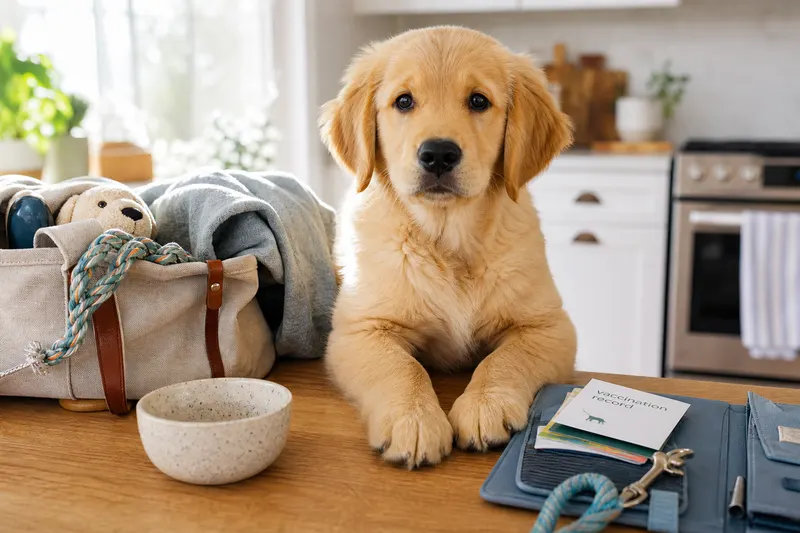
New Puppy Checklist: Health Records, Vaccines & First Vet Visit
A new puppy checklist should do more than list toys and treats. The first weeks at home are when you set habits that determine your puppy’s health for years-vaccines, parasite prevention, training, and record-keeping. If you organize early, you’ll spend less time scrambling for paperwork and more time enjoying your puppy.
This guide gives you a practical new puppy checklist focused on health, records, and routines. You’ll also learn how to build a system that supports vaccination reminders and daily check-ins-without becoming overwhelming.
Why this matters
Puppies grow fast, and so do responsibilities: - Vaccine series and booster windows - Socialization with safety boundaries - Worming and parasite prevention - Microchip registration - Preventing common household accidents
PetClues can support this stage by storing vaccine proof, sending reminders, and making it easy to track small daily changes that matter (appetite, stool, energy).
New puppy checklist: the first 72 hours
Health and safety essentials - Book a vet visit (or confirm your next booster date) - Verify current diet and transition plan - Puppy-proof your home (cords, plants, medications, trash) - Choose an emergency clinic and save the number
Records to collect immediately - Adoption/breeder vaccine record - Microchip paperwork - Any deworming or medication history
If paperwork is missing, start a new record system now using organize pet medical records.
Week 1-2: build your medical timeline
Vaccination plan
Ask your vet for a written plan and follow a reliable puppy vaccination schedule. Start here: - puppy vaccination schedule
Set reminders the same day. PetClues can send a pet vaccination reminder and keep the certificate attached so boarding forms are painless later.
Parasite prevention
Discuss: - Heartworm prevention - Flea and tick prevention
Use these guides to build a calendar: - heartworm prevention schedule - flea tick prevention
Microchip registration
If your puppy is chipped, complete ownership details promptly: - microchip registration
Week 2-4: routine and tracking (the “easy to miss” part)
Feeding and potty rhythm
Choose consistent anchors and keep notes: - Meal times and portion - Potty breaks and accidents - Stool quality
If you want a combined routine approach, see dog feeding schedule.
Daily check-in habit
Keep it simple: - Ate? yes/no - Energy normal? yes/no - Coughing/itching/vomiting? yes/no - Poop normal? yes/no
PetClues daily check-ins are designed for this short format so you can see patterns without writing long notes.
Month 2-6: socialization with health boundaries
Your vet will guide safe exposure timing based on vaccines. Common principles: - Controlled playdates with healthy, vaccinated dogs - Avoid unknown dog parks and high-traffic pet areas early - Prioritize positive, low-stress experiences
Build an emergency-ready profile
Even healthy puppies can get into trouble. Create an emergency summary early: - Microchip ID - Vet contacts - Current meds (if any) - Allergies/reactions
Use pet emergency information as your template. PetClues can store this “emergency passport” alongside records.
Why this matters (new puppy reality)
The first month with a puppy is a blur. The checklist matters because real life is messy: - You’re sleep-deprived and can’t remember if your puppy ate breakfast or just licked the bowl - You’re trying to socialize safely while navigating vaccine timing - A new stool change or cough makes you wonder if it’s normal or urgent - Different people help care for the puppy, and routines get inconsistent
A strong new puppy checklist gives you two advantages: consistency (so problems are less likely) and clarity (so if something changes, you can describe it accurately to your vet).
Expanded timeline: weeks 1-12
Use this as a practical roadmap and customize it with your veterinarian.
Week 1: settle in and establish baselines
- Schedule your first vet visit (or confirm the next booster date).
- Start a daily check-in: appetite, energy, stool, and any vomiting/itching.
- Begin crate and alone-time training in tiny steps.
- Photograph paperwork and upload it to your record system.
If you’re organizing from scratch, see organize pet medical records.
Weeks 2-4: routine becomes your superpower - Keep meal and potty anchors consistent (this supports training and digestion). - Start prevention calendars early: - heartworm prevention schedule - flea tick prevention - Continue controlled socialization (safe, positive, low-risk settings).
PetClues daily check-ins help here because you can spot patterns like “new treats = soft stool” or “busy days = less water.”
Weeks 5-8: training, exposure, and health follow-through - Keep your puppy vaccination schedule on track: puppy vaccination schedule - Build a simple walk and feeding rhythm: dog feeding schedule - Start “handling practice” (paws, ears, mouth) to make vet visits and grooming easier later.
Weeks 9-12: prepare for real-life needs
Even if you don’t plan to travel or board soon, emergencies happen. - Make sure microchip registration is complete: microchip registration - Keep vaccine proof easy to share for daycare/boarding: pet boarding preparation - Build your sitter packet so someone else can help safely: pet sitter instructions
Common mistakes (and how to avoid them) - Missing booster windows and delaying protection - Over-socializing in high-risk areas before vaccines are complete - Changing food too quickly, making GI issues harder to interpret - Not measuring portions, leading to unintentional overfeeding - Skipping prevention doses because “it’s not bug season yet” - Forgetting to register the microchip and add a backup contact - Not saving vaccine certificates and invoices (proof matters)
What veterinarians recommend (expert puppy tips)
Many vets recommend focusing on: - Consistency: stable meal times, predictable potty breaks, and a simple daily check-in. - Documentation: store vaccine proof and set reminders the same day you receive a schedule. - Safe socialization: prioritize controlled exposure and avoid unknown dog-heavy areas until your vet confirms protection. - Early prevention: parasite prevention is easier than treatment; build a calendar you’ll follow.
PetClues can support this by keeping records, reminders, and daily check-ins in one place, so you’re not juggling calendars, photos, and inbox searches.
FAQ
What is the most important part of a new puppy checklist?
A clear health plan: vaccines, parasite prevention, microchip registration, and a record system so you can prove care and track changes.
When should I schedule the first vet visit?
Ideally within the first week home, or immediately if you’re unsure about vaccine status or your puppy seems unwell.
How do I keep vaccine dates straight?
Use a written schedule plus reminders. A pet health records app like PetClues can store proof and send pet vaccination reminders.
Do I need to track daily health for a healthy puppy?
Simple check-ins help you catch early issues and provide useful history if something changes.
What documents should I keep?
Vaccine certificates, invoices, microchip information, and any medication history.
Should I start flea/tick and heartworm prevention right away?
Ask your vet based on your region and your puppy’s age/weight. Use a calendar so doses aren’t missed.
How do I know if my puppy’s stool change is serious?
Track frequency and severity. Mild soft stool after a food change can happen, but repeated diarrhea, blood, vomiting, or lethargy should prompt a vet call.
What should I track daily in the first month?
Appetite, stool quality, energy, cough/sneeze, itching, and any vomiting. A consistent daily check-in creates a useful baseline.
Should I prepare boarding paperwork early?
Yes. Even if you don’t plan to board, emergencies and travel happen. Having vaccine proof and emergency info ready reduces stress.
How does PetClues help with a new puppy?
It stores vaccine certificates, keeps prevention and booster reminders, supports daily check-ins, and maintains an emergency passport you can share quickly.