
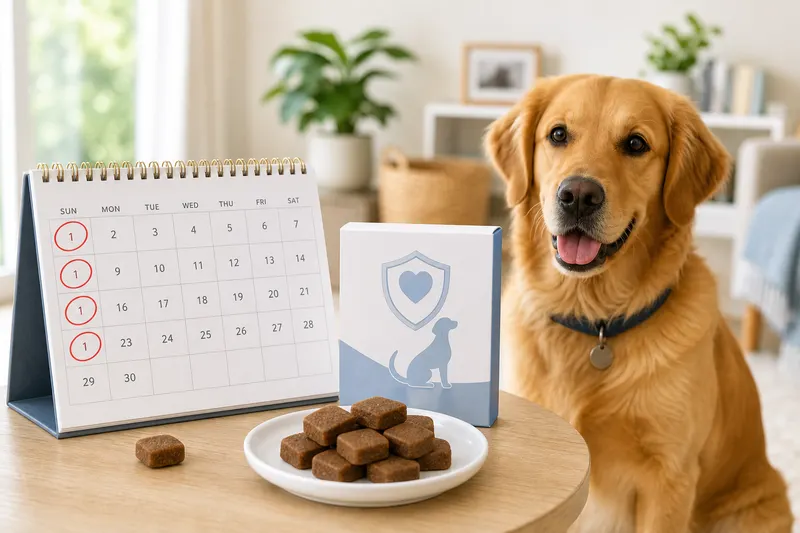
Heartworm Prevention Schedule & Reminder Guide for Dogs
A consistent heartworm prevention schedule is one of the highest-impact, lowest-effort health habits you can build for your dog. Heartworm disease is serious, expensive to treat, and far easier to prevent than to manage. The challenge isn’t knowing it’s important-the challenge is remembering every month without fail. A reliable reminder system matters.
This guide explains how heartworm prevention works, how to create a schedule you’ll follow, what to do if you miss a dose, and how to tie it into the rest of your dog’s health calendar.
Why this matters
Heartworm is spread by mosquitoes. Prevention is typically a monthly medication (or longer-acting options) that stops infection before it becomes adult worms in the heart and lungs.
Consistency matters because: - Missed doses can leave gaps in protection - Some preventatives also cover other parasites - Testing schedules may be required by your clinic
PetClues helps by pairing a heartworm prevention schedule with reminders and medication logs inside a pet health records app.
Building your heartworm prevention schedule
Step 1: choose the monthly anchor
Pick a date that’s easy to remember: - First of the month - Payday - The day you change filters or do another monthly task
Step 2: set two reminders - A “give the dose” reminder - A “backup” reminder 24 hours later if not confirmed
Step 3: log the dose
Logging prevents double-dosing and helps you answer your vet accurately. PetClues supports a reminder + confirmation flow and keeps the prescription document attached.
What to do if you miss a dose
Rules vary by product and region. Practical steps:
- Give the missed dose as soon as you remember (unless your vet advises otherwise).
- Call your vet if the gap is significant or if you’re unsure.
- Resume your monthly anchor date only after confirming the safest plan.
Don’t guess with preventatives; your clinic can advise based on the specific medication.
Combine heartworm with the rest of prevention
Most households run a paired calendar: - Heartworm prevention - Flea/tick prevention
Use flea tick prevention to coordinate schedules so you’re not juggling dates.
Travel and seasonal questions
Even if you live in a lower-risk area, travel can change exposure. If you travel or board, keep proof and your schedule ready: - traveling with pets - pet boarding preparation
Why this matters (real life scenarios)
Heartworm prevention often fails for practical, not emotional, reasons: - You give the first dose, then forget until the next vet reminder months later - You travel, routines shift, and the dose is missed in the chaos of packing - Two people “think the other person did it,” leading to missed months or double dosing - Your dog gains or loses weight and the dose size isn’t reviewed
The point of a heartworm prevention schedule is to remove decision-making from busy days. If it’s on autopilot-with reminders, confirmation, and records-you’re far more likely to stay protected.
Month-by-month heartworm prevention schedule (simple and repeatable)
Use this structure for the whole year.
Each month: the 5-minute routine
- Give the dose on your anchor day.
- Confirm it was given (log it, don’t just “hear the reminder”).
- Note any side effects (even mild) for future product choices.
- Check your supply and set a refill reminder if you’re within two months of running out.
PetClues supports this workflow by combining a reminder with a confirmation log and keeping the prescription photo or PDF attached to the entry.
Quarterly: quick review - Confirm you’re using the correct dose size for your dog’s current weight. - Review any missed months and reset the routine. - Update emergency info and med list if anything changed. Use pet emergency information.
Annual: testing and planning
Your clinic may recommend routine testing and a yearly wellness plan. Store your results and invoice so you can reference them later: - organize pet medical records - vet bill organizer
Common mistakes (and how to avoid them) - “We’ll remember” without a reminder + confirmation log - Skipping doses during colder months without accounting for climate and travel - Not coordinating heartworm with flea/tick prevention, creating too many calendar dates - Forgetting to pack doses during travel or boarding transitions - Not recording the exact date given, making gaps hard to spot - Assuming a missed dose can be “fixed” by doubling (don’t do this without vet guidance) - Not updating the schedule after a product change
If you want a unified prevention calendar, pair heartworm with flea tick prevention.
What veterinarians recommend (expert tips)
Vets commonly recommend prevention systems that are predictable and documented: - Prioritize consistency: prevention works when it’s done on time, not when it’s done “most months.” - Use the simplest schedule you can maintain: fewer dates, fewer mistakes. - Keep proof and history: when a clinic asks “when was the last dose,” you should be able to answer with confidence. - Ask about your dog’s specific risk: travel patterns, outdoor exposure, and regional mosquito seasons matter.
PetClues can be used as the record-and-reminder “home base” so the schedule, proof, and dose history stay together.
Quick monthly checklist (copy/paste)
On your prevention day, confirm: - Dose given and logged - Next dose reminder scheduled - Supply remaining (do you need a refill soon?) - Any side effects noted - Flea/tick prevention status checked too
If something changes (new product, travel, dose size), update the schedule the same day so your next month stays simple.
FAQ
What is a heartworm prevention schedule?
It’s a consistent plan for administering preventative medication on time (often monthly) and tracking doses to avoid gaps.
Is heartworm prevention needed year-round?
Many vets recommend year-round prevention because mosquitoes can appear unexpectedly and climate patterns vary. Your vet will tailor advice to your region.
What if I forgot a dose?
Give it as soon as you remember and call your vet if the gap is large or if you’re unsure. Avoid doubling without guidance.
How do I remember every month?
Use reminders with confirmation logging. PetClues can send reminders and store the medication record so you can prove consistency.
Do puppies need heartworm prevention?
Often yes once they reach an appropriate age/weight-your vet will guide timing as part of a new puppy plan.
Can I coordinate heartworm with flea/tick meds?
Yes. Pair calendars so prevention becomes one monthly routine rather than multiple scattered dates.
How do I prevent double-dosing in a multi-person household?
Use one rule: the person who gives the dose logs it immediately. Reminders alone aren’t enough when multiple caregivers are involved.
What if my dog vomits after a dose?
Document what happened and call your vet for guidance. Don’t re-dose automatically without instructions because products differ.
How can I keep preventatives organized while traveling?
Pack doses in a quick-access pouch and keep your schedule visible. Use traveling with pets for a full prep plan.
Why should I log the exact dose date?
Exact dates help you spot gaps, avoid accidental double dosing, and answer your vet confidently if testing or follow-up questions come up.