
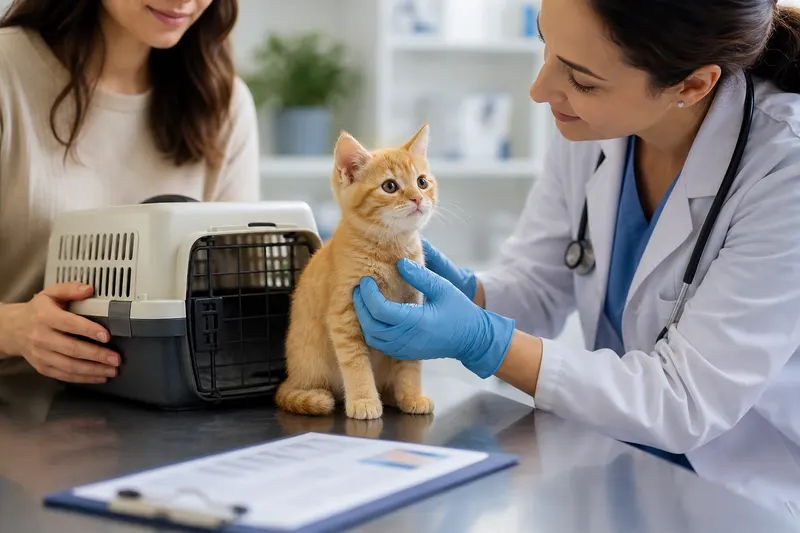
New Kitten Checklist: Vet Visits, Vaccines & Health Records Setup
A new kitten checklist is your best defense against “we forgot to schedule that” moments-especially for vaccines, parasite prevention, and record-keeping. Kittens change quickly, and the first months are when you build habits that make future vet care easier and less stressful.
This guide focuses on health and documentation: a kitten vaccine timeline, what to record, how to plan carrier training, and how to set up reminders so you don’t miss critical booster windows.
Why this matters
Kittens are vulnerable to contagious disease and parasites, and they can hide symptoms until problems are advanced. Early structure helps you: - Complete the kitten vaccine series on time - Track weight and appetite changes - Keep boarding-ready paperwork - Reduce carrier stress with training
PetClues supports this by storing vaccine proof and reminders and by making daily check-ins quick enough to maintain.
New kitten checklist: first 72 hours
Health basics - Book a vet visit (or confirm next vaccine date) - Plan a litter box setup in a quiet area - Confirm diet and transition slowly - Choose an emergency clinic and save the number
Records to collect - Shelter/rescue vaccine dates - Any deworming or flea treatment history - Microchip paperwork (if applicable)
If records are incomplete, start organizing now using organize pet medical records.
Week 1-4: vaccines, prevention, and tracking
Vaccination schedule
Follow a clear cat vaccination schedule and set reminders for boosters: - cat vaccination schedule
Parasites and prevention
Talk to your vet about: - Fleas and ticks (regional) - Deworming
Use flea tick prevention to build a realistic calendar.
Weight and growth notes
Kittens change fast; note: - Weekly weight (if possible) - Appetite and energy - Stool quality
Short daily check-ins help you spot “off days” early.
Carrier training (start immediately)
Make the carrier normal - Keep it out with a soft blanket - Feed treats near it, then inside - Practice short “in and out” sessions
Carrier training reduces stress for vaccines and emergency trips.
Build an emergency-ready summary
Create a short card with: - Vet contacts - Any meds and last dose time - Known reactions - Microchip ID
Use pet emergency information. PetClues can store this as an emergency passport alongside vaccine proof.
Why this matters (real new-kitten moments)
The first weeks are full of “is this normal?” questions: - Your kitten eats enthusiastically one day and nibbles the next - Sneezing starts after you bring them home and you’re unsure if it’s stress or illness - Stool changes after a diet transition and you don’t know what to monitor - The carrier becomes “the scary box,” making vaccine appointments harder every time
A strong new kitten checklist reduces uncertainty by turning these into trackable routines. When you can say “this started Tuesday” or “she’s been eating 70% of normal for 2 days,” your vet can advise faster and with fewer assumptions.
Expanded timeline: weeks 1-12 at home
Use this as a practical rhythm. Adjust for your kitten’s age and your vet’s recommendations.
Week 1: settle in and establish baselines
- Keep one quiet “safe room” for the first 24-72 hours.
- Log appetite, water intake, and litter box habits daily.
- Start carrier training immediately (short, positive sessions).
- Save every document you receive (even if it’s a photo at first).
If you’re building your record system, start with organize pet medical records.
Weeks 2-4: complete early vaccines and prevention plan - Follow the booster schedule in cat vaccination schedule and set reminders right away. - Coordinate flea/tick prevention based on your region and household pets: flea tick prevention. - Track weight weekly if possible; tiny changes can be meaningful in kittens.
Weeks 5-8: reduce stress and increase resilience - Keep feeding routines consistent and avoid frequent food changes. - Add a weekly “health glance” routine: ears, eyes, coat, and gums. - Continue carrier practice even when you don’t have an appointment.
Weeks 9-12: prepare for boarding/travel and “real life”
Even if you’re not traveling soon, a kitten’s lifestyle can change quickly. - Keep vaccine proof ready in case you need boarding or a sitter. - Build your emergency passport and share plan with a trusted person. - If you expect boarding or travel, read: - traveling with pets - pet boarding preparation
PetClues can make this easier by keeping vaccine certificates, reminders, and your emergency summary together so you’re not rebuilding paperwork from scratch later.
Common mistakes (and how to avoid them) - Skipping carrier training until the first vaccine visit (then the carrier becomes a battle) - Changing foods repeatedly in the first month, making stool tracking meaningless - Forgetting booster windows and turning a simple series into a delayed schedule - Not saving invoices and certificates (proof matters for boarding and new clinics) - Assuming indoor kittens have zero parasite risk (household exposure still exists) - Not listing a backup contact in emergency info and microchip records - Waiting too long to call the vet when appetite drops significantly
What veterinarians recommend (expert tips for kittens)
Many vets emphasize three priorities:
1) Finish the vaccine series on time
Kittens need a series, not one shot. Set reminders and keep documentation: - cat vaccination schedule
2) Track appetite and litter box habits consistently
Kittens can deteriorate faster than adult cats. A simple daily check-in is enough: - Ate normally? - Energy normal? - Stool normal?
3) Reduce stress to prevent spirals
Stress can worsen GI issues and upper respiratory symptoms. A predictable routine, gentle carrier training, and stable diet are often recommended.
FAQ
What’s the most important part of a new kitten checklist?
Completing the vaccine series on schedule and establishing a record system so proof and dates are always available.
When should my kitten see a vet?
Ideally within the first week home, especially if vaccine history is incomplete or if your kitten has diarrhea, sneezing, or poor appetite.
How do I avoid missing kitten vaccine boosters?
Use reminders with a written plan. A pet health records app like PetClues can send a cat vaccination reminder and store certificates.
Should I track my kitten daily?
A short check-in for appetite, energy, and stool is usually enough and helps you notice early changes.
What documents should I save?
Vaccine certificates, invoices, deworming/treatment notes, and microchip information.
How do I reduce carrier stress?
Keep the carrier out as a “normal object,” use treats, and practice short sessions rather than only bringing it out for vet visits.
How do I know when a kitten’s appetite change is concerning?
If your kitten eats significantly less for more than a day, seems lethargic, or has vomiting/diarrhea, contact your vet. Kittens have less “buffer” than adults.
What should I track daily in the first month?
Appetite, stool quality, energy, sneezing/coughing, and any vomiting. Consistent short notes help your vet advise accurately.
Should I prepare boarding paperwork even if I don’t plan to board?
Yes. Travel, family emergencies, or last-minute trips happen. Having vaccine proof and an emergency summary ready reduces stress.
How can PetClues help with a new kitten?
It can store vaccine proof and invoices, send cat vaccination reminders, and keep an emergency passport and daily check-ins in one place for easy sharing.