
Mobility preservationmedium breed
Senior Joint Care for English Bulldogs
A mobility-preservation plan for senior English Bulldogs (typical lifespan 8-10 years) - stairs, pain scores, and the overlap with BOAS and skin-fold care.
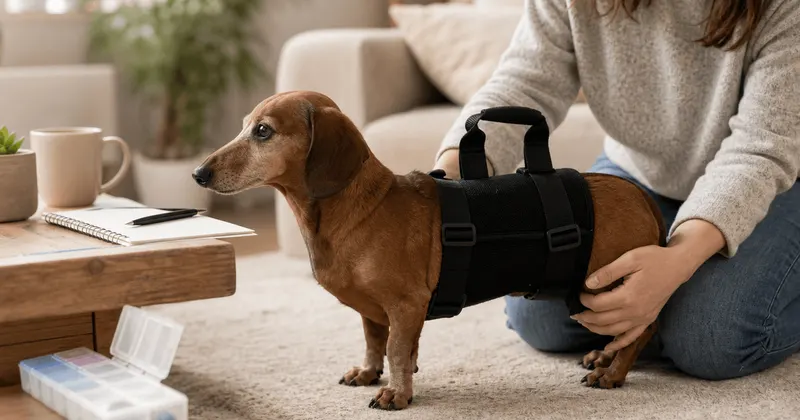
Clinical context
Why this stage is different for English Bulldogs
Senior joint care is not a glucosamine commercial. It is lean mass, pain control, traction, and a dated limp diary. Small breeds hide pain by skipping jumps they used to take. Pair orthopedic notes with weight-management and cardiac screening so NSAIDs are not started on a dog with undiagnosed kidney or gut disease. For a medium English Bulldog, keep portions honest and write down what the clinic actually did, not what you meant to ask. Because this breed watches BOAS and skin-fold care, put that line on the same page as this senior joint care plan so a new veterinarian is not guessing.
Interactive watch list
Mobility symptom checklist
Dated protocol
Senior mobility timeline
Baseline
Video the gait
Film your English Bulldog on leash, from the side, on a non-slip floor. Repeat every 90 days.
Workup
Pain vs neurology
IVDD, lumbosacral disease, and cruciate tears are not all "give him a chew."
Plan
Multimodal
Weight, NSAID or other analgesic, PT, ramps. One lever is not a plan.
q 3-6 mo
Kidney/liver check
If on chronic NSAIDs, labs belong in the same vault as the limp diary.
Home
Environment pass
Add rugs and ramps where this English Bulldog slips. Photograph the setup for sitters.
Breed-specific briefing
Why this English Bulldog page is not a copied template
This is not a generic dog article with the word English Bulldog pasted in the headline. It is a senior joint care plan for a medium non-sporting dog whose adult weight is 40-50 lb and whose typical lifespan is 8-10 years. Searchers also use "bulldog" for this breed.
The medical watch list that should sit next to this mobility preservation work is BOAS and skin-fold care. If a paragraph on this site could apply equally to a Chihuahua and a Mastiff, it does not belong on this URL.
Medium seniors show arthritis as "slowing down." Video the gait every 90 days. Pain is not a personality change.
This group is a mixed medical bag. Trust the breed healthFocus on this page more than the kennel-club cluster name.
Airway risk (BOAS and skin-fold care) changes heat, travel crates, and vaccine-day stress. Do not plan a boarding drop-off on a 95 F afternoon as if this were a snouted sporting dog.
BOAS and airway notes rewrite this Senior Joint Care day: heat, a tight collar, and a dryer-heavy groomer are medical events. Sleep snoring, reverse-sneeze clusters, and collapse after a short walk need dated video. Anesthesia consent starts with an airway exam.
Build this Senior Joint Care routine around cool-down, short sessions, and a go-bag with a harness plus a written BOAS history. Do not book group play on a hot afternoon. If airway surgery is discussed, keep pre-op videos with the consent forms.
Practical standard for this page: photograph every certificate the day it is issued, put the next due date in a shared reminder, and store the PDF beside weight and stool notes so a boarding desk, neurologist, or ER in a strange zip code can read the same English Bulldog file.
If BOAS and skin-fold care is already active, do not start a new diet, supplement, or over-the-counter pain drug without putting the change on the timeline. Stacking treatments is how "we tried everything" becomes an unreadable chart.
Digital vault
Joint-care records
- Gait videos with dates.
- Radiograph/MRI summaries.
- Pain medication trials and side effects.
- Home modifications (ramps, rugs) photographed for sitters.
- Links to BOAS and skin-fold care clinical briefs when relevant.
- NSAID start date beside the latest kidney/liver panel.
- Photograph labels and certificates the same day they are issued for this English Bulldog.
- Note the clinic name and city every time. English Bulldog families move; portals do not travel with them.
- If BOAS and skin-fold care changes handling (heat, stairs, sedation), write that in the visit note before you forget.
- Export a PDF before boarding, relocation, or a specialist referral.
Bowl notes
Joints and the bowl
The highest-yield "joint supplement" is a lean BCS.
Prescription joint diets can help some dogs; they still require portion control.
Omega-3 doses used in studies are higher than a fish-oil pearl from the grocery aisle - ask for mg of EPA/DHA.
Do not add a new joint chew the same week you change English Bulldog pain meds - you will not know what helped.
Keep the current bag photo and first ingredient list next to this English Bulldog plan.
For a medium English Bulldog, keep portions honest and write down what the clinic actually did, not what you meant to ask.
Do not start a new protein, supplement, or "joint chew" the same week you change this senior joint care plan. You will not know what caused a flare.
Because this breed watches BOAS and skin-fold care, put that line on the same page as this senior joint care plan so a new veterinarian is not guessing.
SERP-ready clinical FAQ
Senior Joint Care for English Bulldogs - common questions
Giant breeds may need a senior orthopedic plan by age 5-6; toy breeds often later. Use function, not birthday. Typical lifespan for this breed is 8-10 years.
Evidence is mixed. They are optional. Weight control, pain assessment, and treating the actual diagnosis (cruciate, IVDD, hip dysplasia) are not optional.
Only after a veterinarian examines the dog and checks that kidneys, liver, and gut can tolerate it. Never start human pain meds. Track stool and appetite after the first doses.
They cut repetitive jumping that flares joints and spines. Use them for cars and sofas, add rugs on slick floors, and keep nails short so traction stays honest.
The last certificates, the current food bag photo, a weight, and a short list of meds. If you use PetClues, open the timeline on your phone. Clinics work faster when they are not reconstructing history from memory.
It is built around a medium non-sporting dog at 40-50 lb, lifespan 8-10 years, with BOAS and skin-fold care on the watch list. If a tip would fit a Chihuahua and a Mastiff the same way, it does not belong here.
From the PetClues library
Editorial guides this English Bulldog page is built on
These are the existing long-form blogs, not cloned matrix text. Read them, then come back to this senior joint care checklist.
Internal PageRank loop
More English Bulldog Health Guides
Cross-link into the clinical breed-condition library so this lifecycle URL passes equity to the medical matrix - and so owners can move from diet timing to disease surveillance without a dead end.
Related Lifecycle Stages
The other 14 lifecycle and diet briefs for English Bulldogs - stay inside this breed cluster instead of bouncing to a generic feeding article.
PetClues is not veterinary advice. Always consult a licensed veterinarian for diagnosis, treatment, and urgent medical decisions.