
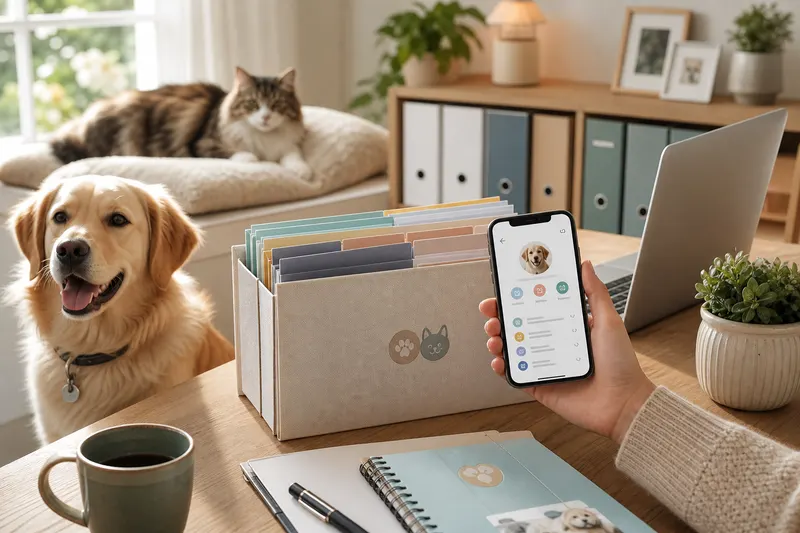
Hereditary Conditions in Pets: How to Document Family and Breed History
Capture breed predispositions, litter mate health, and parent history to inform screening schedules with your vet.
Quick answer: Hereditary Conditions in Pets: How to Document Family and Breed History works best when hereditary and breed health history is stored in one dated timeline with reminders for every next due item. Owners of purebred or breeder-sourced pets should keep pedigree notes, parent screening results, breeder health guarantees, genetic test reports, set alerts before deadlines, and maintain an emergency summary for sitters, travel, and after-hours care.
Why this matters
Owners of purebred or breeder-sourced pets juggle daily care, unexpected symptoms, and paperwork that arrives at the worst moments. Without a system for pet medical history, small gaps become expensive delays - missed boosters, duplicate labs, or frantic searches before boarding. Strong hereditary and breed health history habits also improve communication. When everyone sees the same timeline, questions about doses, vaccine timing, or prior treatments get answered in seconds instead of arguments. PetClues is built for this exact workflow: documents, reminders, and emergency-ready summaries in one calm place.
What you need to know about hereditary and breed health history
hereditary and breed health history is the practice of keeping pedigree notes, parent screening results, breeder health guarantees, genetic test reports accurate, dated, and easy to share. It is part of pet medical history and directly supports safer everyday decisions. You do not need perfect records on day one. Start with the most recent visit, then backfill older files when you have time. Consistency beats completeness at the start. Digital records outperform paper for search, sharing, and reminders - especially when multiple adults or professionals touch your pet's care.
hereditary and breed health history, at-a-glance tracker
| Item | Status | Next action |
|---|---|---|
| Latest vet summary | On file / missing | Upload after visit |
| Active medications | Listed / incomplete | Photo prescription label |
| Emergency contacts | Verified / stale | Confirm phone annually |
| Next due date | Scheduled / unknown | Set reminder now |
Step-by-step guide
- Audit what you already have for hereditary and breed health history: paper folders, email attachments, clinic portals, and photos on your phone.
- Choose one home for pet medical history. A dedicated pet health app beats scattered folders because reminders and documents stay linked.
- Upload or photograph pedigree notes, parent screening results, breeder health guarantees, genetic test reports. Name files by date and type so future-you can scan quickly.
- Turn every "next due" date into a reminder with a 7-day early alert for vaccines, refills, or follow-up labs.
- Add a short summary card with emergency contacts, allergies, active medications, and microchip ID.
- Review records after each vet visit while details are fresh. Note what improved, what worsened, and what to watch.
- Share access with anyone who may care for your pet: partners, sitters, walkers, or family nearby.
- Run a monthly 10-minute check: upcoming due dates, missing documents, and any unexplained symptom patterns.
Understanding hereditary and breed health history in everyday pet care
hereditary and breed health history is not a one-time task for Owners of purebred or breeder-sourced pets. It is an ongoing habit that connects vet visits, home routines, and the paperwork you may need when boarding, traveling, or handing care to someone else. When pet medical history are organized, you spend less time searching email threads and more time noticing real changes in appetite, energy, mobility, or behavior. That shift is especially valuable when symptoms are subtle or when multiple people help care for the same pet.
What documents and details belong in your system
At minimum, keep pedigree notes, parent screening results, breeder health guarantees, genetic test reports in one searchable place. Add short owner notes after each update: what changed, what the clinician recommended, and what follow-up is still open. Photos of prescription labels, vaccine certificates, and discharge summaries are often enough when PDFs are unavailable. Date each upload the same day you receive it so your timeline stays trustworthy.
How pet medical history support better decisions
Complete records help you answer vet questions without guessing. They also make it easier to compare trends across months - weight, lab values, medication responses, or flare-up frequency. For Owners of purebred or breeder-sourced pets, a clear history reduces duplicate tests, prevents missed boosters, and makes emergency visits calmer because allergies, medications, and prior diagnoses are already documented.
Best practices - Store originals and add plain-language notes so non-vets understand context. - Set reminders at the clinic checkout desk, not days later at home. - Keep vaccination certificates separate from invoices for faster boarding and travel prep. - Track reactions, side effects, and "off days" next to the medication or vaccine that preceded them. - Use one timeline per pet in multi-pet homes to avoid mixing histories. - Export or screenshot records before travel, moves, or emergency boarding requests.
Common mistakes to avoid - Assuming the clinic will always have complete history when you switch vets. - Saving documents without dates, making timelines impossible to reconstruct. - Relying on memory for medication names, doses, or last booster dates. - Waiting until an emergency to compile allergies and prescription details. - Using multiple apps or folders without a single source of truth. - Skipping sitter or family access until the night before a trip.
PetClues workflow
PetClues helps Owners of purebred or breeder-sourced pets turn hereditary and breed health history into an automated system instead of a stressful chore.
- Create a pet profile and upload your latest pedigree notes.
- Add upcoming due dates as smart reminders with email nudges.
- Build an emergency passport with contacts, allergies, and active medications.
- Share read-only access with sitters or co-parents when needed.
- Review PetCare Score monthly to spot gaps in vaccines, records, or preventive care.
Scenario walkthrough
Imagine you get a boarding request at 8 p.m. for tomorrow morning. With hereditary and breed health history organized, you open one timeline, export vaccine proof, confirm pedigree notes are current, and share a read-only link. Without that system, you search email, find a blurry photo from last year, and miss a Bordetella booster that denies entry. The same preparation helps urgent care: clinicians trust dated documentation over memory when choosing safe medications. For Owners of purebred or breeder-sourced pets, the highest-leverage upgrade is photographing every discharge summary at the clinic door and setting reminders from the "recheck" line before you reach the parking lot.
Red flags worth a same-day call - Sudden appetite, thirst, or bathroom habit changes lasting more than 24 hours. - Repeated vomiting, diarrhea, coughing, or labored breathing. - Limping, collapse, seizures, or trauma even if your pet seems to recover quickly. - Medication side effects that are new, severe, or worsening. - Any concern where having hereditary and breed health history documented would help the clinic act faster.
Export and sharing checklist
Before travel, boarding, or a specialist referral, export a PDF that includes pedigree notes, parent screening results, breeder health guarantees, genetic test reports and verify recipients can open it on mobile: - Vaccine names with lot numbers and clinic phone - Active prescriptions with mg/kg dosing if available - Recent lab trends (not just "normal" verbal summaries) - Allergy and adverse reaction history - Emergency contacts authorized to make medical decisions
Set a recurring calendar event to confirm hereditary and breed health history is current: - Upcoming reminders still fire with a 7-day lead - Latest vet PDFs are uploaded and dated - Emergency contacts and microchip ID match physical tags - Medication list matches what is in the cabinet - Insurance or wellness plan balances are noted
Keep exploring
Related articles - Pet Allergy and Adverse Reaction History: Log Template for Vets - Pet Surgery History Documentation: What to Save After Every Procedure - Adopting a Shelter Pet: Medical Records Setup From Day One
Knowledge base - Create a Shared Pet Medical History for Family
FAQ - What is a pet health timeline?
Guides & tools - Breed care guides
Product - Pet health records - PetClues pricing - Browse pet health guides
FAQ
Why document relatives if my pet is healthy?
Family patterns guide early screening for hip, heart, or eye conditions.
Do genetic tests replace history?
No. Tests plus family notes give the fullest picture.
Should I share history with new vets?
Always. It shapes anesthesia, imaging, and wellness plans.
How does PetClues help with hereditary and breed health history?
PetClues stores documents, sends reminders for due dates, and keeps an emergency passport ready to share with vets, sitters, or family.
How often should I update hereditary and breed health history?
Update after every vet visit, medication change, or new document. A monthly 10-minute review catches gaps before they become problems.
Can I share records with a sitter or co-parent?
Yes. Shared access keeps everyone aligned on doses, allergies, and upcoming appointments without forwarding screenshots.
What is the fastest way to get started?
Upload your latest vet document, add the next due date as a reminder, and fill in emergency contacts. Expand history over time.
Do digital records replace my veterinarian?
No. Records support better conversations with your vet. Always confirm medical decisions with a licensed professional.
Start organizing with PetClues
Ready to put hereditary and breed health history on autopilot? PetClues keeps pet medical history, vaccination reminders, medication schedules, and emergency pet passports in one free account for your first pet. Create your free account or explore PetClues pricing for multi-pet households.